Ohio Farmers Union

Serving Family Farmers and Consumers Since 1934


United to Grow Family Agriculture Since 1934

  • About
    • The Farmers Union Triangle
    • Vision
    • OFU Leadership
  • Issues
    • 2020 Virtual Lobby Days
    • OFU Policy & NFU Policy
    • 2019 Lobby Day Registration
    • Get Involved!
    • NFU Climate Leaders
  • Education
    • 2019 OFU Essay Contest
    • Ohio Farmers Union Scholarships
    • Farm Safety
    • Renewable Energy Curriculum
  • Insurance
    • Hastings Mutual Insurance Co.
    • Health & Other Offerings
    • Ohio BWC Group Coverage
  • Join Us
    • Member Benefits
    • Insurance
  • Blog

Ohio’s organic dairy producers and marketers score rare regulatory win over factory farms, ‘Big Ag’

November 6, 2011 By Ron Sylvester 1 Comment

In a little noticed decision one week ago, an Ohio Department of Agriculture dairy labeling rule that was more stringent than federal Food and Drug Administration policy was dropped by the agency to the cheers of family farmers and others involved in the organic dairy industry.

As of 2008, ODA had demanded that dairy producers and marketers attach government-approved qualifying statements to labels when claims such as “Hormone Free” were used on the labels. Organic producers have been especially incensed over the rule because they control their dairy herds’ environment to be free of pesticides and from administering growth and other hormones to dairy cows such as rBST, a synthetic bovine growth hormone routinely given to dairy cattle in factory farming environments.

With the rule, organic dairies had to add statements to their labels that were unfair – and many would say unfounded – qualifiers. Now, USDA Certified Organic producers will be able to tout that fact on their labels as well as letting consumers know, without qualification, that their product is hormone free.

“Ohio’s abandonment of this misguided rule is a victory for consumers, farmers and manufacturers alike,” said Christine Bushway, CEO of the Organic Trade Association. (OTA)

“The organic label is a federally regulated program that provides consumers with the knowledge that their food is produced without the use of antibiotics, pesticides or added growth hormones. Consumers have the right to make informed choices about the foods they eat, and farmers and manufacturers can continue to communicate truthfully with consumers” Bushway added.

[Read more…]

Filed Under: Blog Tagged With: Dairy, Milk, Ohio Department of Agriculture, Organic, rBST, Snowville Creamery, Victoria Mitchell Taylor, Warren Taylor

NFU Suggests Adjustments to Dairy Legislation

October 30, 2011 By Ron Sylvester Leave a Comment

WASHINGTON (Oct. 28, 2011) – National Farmers Union sent a letter to leaders on the U.S. House of Representatives and Senate Agriculture Committees urging them to continue working to reform dairy policy in the farm bill as part of the Joint Select Committee on Deficit Reduction (Super Committee) process. The Dairy Security Act of 2011 (DSA) could lead to further vertical integration of the dairy industry if additional steps are not taken.

“The DSA, in its most recent form, will likely encourage the use of forward contracts,” said NFU President Roger Johnson. “For many years, NFU has opposed the increased use of forward contracting for dairy producers. Similar to the consolidation and vertical integration that has occurred in the poultry and swine sectors, the DSA could lead to increased forward contracting by dairy processors will only serve to transform the American dairy industry at a heavy cost to farmers and rural communities.”

[Read more…]

Filed Under: Blog Tagged With: Dairy Policy

Ohio Farmers Union members enjoy low Ohio workers compensation rates

October 26, 2011 By Ron Sylvester Leave a Comment

How would you like to save a few bucks on your workers compensation costs?

Maybe you’re satisfied in another workers’ compensation group rating program, but what if we could give you the same, or better, premium savings, along with competitive low fees that can’t be beat? [Read more…]

Filed Under: Blog Tagged With: BWC, Member Benefits, Ohio, Ohio Farmers Union, Workers Compensation

Ag News Update – October 26, 2011

October 26, 2011 By Ron Sylvester Leave a Comment

A few interesting stories from around Ohio and the U.S. from the past few days …

The fracking industry’s war on the NYT – and the truth

Huffington Post – by Robert F. Kennedy, Jr.

…

American sourced natural gas might also have helped free us from our debilitating reliance on foreign oil now costing our country so dearly in blood, national security, energy independence, global leadership, moral authority, and treasure amounting to $700 billion per year — the total cost to our country of annual oil imports — in addition to two pricey wars that are currently running tabs $2 billion per week.

My caveat was that the natural gas industry and government regulators needed to act responsibly to protect the environment, safeguard communities from irresponsible practices and to candidly inform the public about the true risks and benefits of shale extraction gas.

The opposite has happened. …

Read the rest at the Huffington Post

Farm Bill process rolling with Ag leaders striving for Nov. 1 deadline

Wallaces Farmer

U.S. Secretary of Agriculture Tom Vilsack is laying out USDA’s farm bill priorities this week. But given the current economic climate, and the efforts of the Congressional Super Committee tasked with finding more than $1.2 trillion in budget cuts, Senator Chuck Grassley, R-Iowa, says USDA’s leadership may not carry much weight. He says that he thinks there won’t be time for the Administration to have much of an impact.

That’s because the leaders of the Agriculture Committees Debbie Stabenow, D-Mich., Pat Roberts, R-Kan., Frank Lucas, R-Okla., and Collin Peterson, D-Minn., have told the members of the Super Committee that they’ll have a detailed set of 2012 Farm Bill policy suggestions aimed at achieving the $23 billion in savings they previously recommended by Nov. 1. Grassley believes it will mostly affect Title I, food stamps and perhaps conservation. His understanding is that programs outside those areas will be handled next year.

Read the rest at Wallaces Farmer

Corn ethanol may heighten food scarcity for world’s poor

The Iowa Independent

Pumping that golden elixir — corn-ethanol — into the gas tank can do a world of good, or so goes the argument.

It relieves the U.S. from dependency on foreign oil, some reports say, and it reduces the pollution spewed out the tailpipe.

But, those benefits may take a high human toll.

Over 80 percent of the world’s supply of corn comes from five countries. The U.S. leads the pack, supplying over half of world’s exports, according to a study released Oct. 13 at the World Food Prize in Des Moines.

Read the rest at The Iowa Independent

Bridging the GAP: Bringing food safety regs to small farms

Food Safety News

For large farming operations, food safety audits are commonplace. Most buyers require them before purchasing produce. However, small farms are rarely inspected by auditors, because the cost of implementing a safety plan can be too expensive.

That’s where Bridging the GAPs – a program designed to help small and mid-sized growers find a way to meet food safety guidelines – comes in.

Organized by the Washington State Department of Agriculture (WSDA), the initiative will allow modest-sized operations to reach broader markets such as schools, grocery stores and restaurants, most of which now require Good Agricultural Practices certification.

Read the rest at Food Safety News

New rules proposed for kids working on farms

Ohio Farmer

An update of federal labor regulations governing youth employment could mean significant changes in the types of work young people can do on the farm, according to the leader of Ohio State University Extension’s Agricultural Safety and Health program.

“The Hazardous Occupations Orders For Agricultural Employment hasn’t been touched or changed for the past 40 years,” says Dee Jepsen, with OSu’s Department of Food, Agricultural and Biological Engineering. “What the hazardous occupations order for agriculture does is prohibit youth under the age of 16 from working in and around certain types of environments, outside two basic exemptions.”

One of the two exemptions allowed for in the order historically included allowing children to work on farms owned and operated by their parents. The second traditional exemption was for children under the age of 16 who completed a prescribed farm safety education and training program.

Read the rest at Ohio Farmer

Filed Under: Blog Tagged With: Ethanol, Farm Bill, Food Safety, Fracking, Ohio

Natural Gas Boom: Should You Lease Gas Rights on Your Land Now? Or, wait …

October 24, 2011 By Ron Sylvester Leave a Comment

Here are a few headlines from the last several weeks regarding the beginning of the natural gas rush in Ohio:

  • Lowball gas drill leases haunt Pa., Associated Press
  • In North Dakota, Flames of Wasted Natural Gas Light the Prairie, New York Times
  • Rural Ohio is the Wild West as gas and oil companies compete for drilling rights, The Plain Dealer

If you are a farmer or a landowner in eastern Ohio, it’s likely that if you haven’t had a visit – or several – from a gas company, they’re probably just now pulling into the driveway. They will have a deal for you, maybe even a signing bonus. There are two questions to ask yourself. First, if they drill, do you understand all of the impacts to your land and its water supply. Second, will there be better deals down the road?

From the Associated Press story cited above:

The Beinlichs are among thousands of residents living atop the gas-rich Marcellus Shale who signed lowball leases in the years leading up to the boom in Pennsylvania. In those early days a half-decade ago, virtually no layperson had even heard of the rock formation, let alone knew that drillers had found a way to access the huge reservoir of natural gas locked inside it.

An untold number of industry-friendly agreements are now approaching their expiration dates. But landowners who expected to sign new leases — and reap windfalls of thousands of dollars an acre — are facing the reality that energy companies with billion-dollar investments in the Marcellus are not about to let their prime acreage slip away.

As landowners in Ohio and New York prepare for their own round of Marcellus leasing, high-stakes battles are developing in law offices and courtrooms throughout Pennsylvania. Landowners who signed early for pittances are trying to get out of their leases, and gas companies are trying just as hard to keep them shackled to the original terms. In some cases, landowners say they were fraudulently induced into signing by high-pressure sales agents known in the industry as landmen. In others, residents contend that companies failed to abide by the lease or act in good faith.

Perhaps we in Ohio are where the Beinlich family was a few years ago in Pennsylvania. From the Plain Dealer linked above:

Only a handful of shale gas wells — about 14 — have actually been drilled in Ohio, state records show. But a gusher of money has already been pumped into the state in the form of bonuses when landowners sign lease deals. It totals more than $1 billion so far, said David Mustine, head of JobsOhio, Gov. John Kasich’s new privatized department of development.

The billion-dollar gusher is sure to grow.

Those who signed leases 18 months ago received $500 per acre and a guaranteed royalty of 12 1/2 percent of the value of the gas produced from their acreage.

The competitive frenzy has since pushed the bonus offers to about $5,000 per acre and a royalty of 19 1/2 percent.

One would think that the natural gas market must literally be screaming for supply. We’re hearing a a great deal of cheerleading out of the politicians in Columbus about billions of dollars and hundreds of thousands of jobs. I was thinking about the natural gas market this morning because natural gas is dirt cheap – near a historic low in price – and I was starting to feel feverish about the boom in Ohio. Should I invest in something now? Buy low! Sell high!

Then I remembered this from the New York Times just a few weeks ago (also cited above):

NEW TOWN, N.D. — Across western North Dakota, hundreds of fires rise above fields of wheat and sunflowers and bales of hay. At night, they illuminate the prairie skies like giant fireflies.

They are not wildfires caused by lightning strikes or other acts of nature, but the deliberate burning of natural gas by oil companies rushing to extract oil from the Bakken shale field and take advantage of the high price of crude. The gas bubbles up alongside the far more valuable oil, and with less economic incentive to capture it, the drillers treat the gas as waste and simply burn it.

Every day, more than 100 million cubic feet of natural gas is flared this way — enough energy to heat half a million homes for a day.

The flared gas also spews at least two million tons of carbon dioxide into the atmosphere every year, as much as 384,000 cars or a medium-size coal-fired power plant would emit, alarming some environmentalists.

All told, 30 percent of the natural gas produced in North Dakota is burned as waste. No other major domestic oil field currently flares close to that much, though the practice is still common in countries like Russia, Nigeria and Iran.

Something is not computing. There’s a guy at the door and he says we need to get this matter of a lease handled right away. But, the stuff that they’re going to spend millions of dollars per well on to extract from the ground is being burned as waste as a matter of course in North Dakota.

There are many reasons for Ohio to proceed with caution when it comes to the gas boom. I just gave you three more.

Filed Under: Blog Tagged With: Farmers, Leases, Marcellus, Natural Gas, Ohio, Shale, Utica

Checkoff dollars should be distributed more fairly among livestock groups

October 20, 2011 By Ron Sylvester Leave a Comment

WASHINGTON (Oct. 20, 2011) – National Farmers Union and a coalition of organizations sent a letter to U.S. Secretary of Agriculture Tom Vilsack urging him to take steps to make funding for the Cattlemen’s Beef Board (CBB) more transparent and to ensure that more voices are heard when distributing checkoff dollars. The letter came as a result of a Sept. 27 meeting of ten agricultural organizations in Minneapolis.

“It is the recommendation of this group that seats be made available on all Joint Checkoff Committees for one representative from each national nonprofit industry-governed organization that would qualify as a checkoff contractor and desires to have a representative on the committee,” the coalition wrote. “These committee members would be allowed to engage in all deliberations of the committees; but would not have a vote on motions brought before the committee.”

[Read more…]

Filed Under: Blog Tagged With: Cattlemen's Beef Board, Checkoff, Tom Vilsack, USDA

National Farmers Union joins coalition telling Senate to honor its contract with America’s farmers

October 20, 2011 By Ron Sylvester Leave a Comment

WASHINGTON (Oct. 19, 2011) – National Farmers Union joined a coalition of organizations in signing a letter to U.S. Senators urging them to oppose amendments to the Fiscal Year 2012 Agriculture Appropriations Bill that would affect mandatory funding for U.S. farm policies.

“This is the end of the fourth year of the current five-year farm bill upon which U.S. farmers and ranchers and their lenders have already made financial decisions,” the coalition wrote. “Amendments to an appropriations bill that would alter the terms of this contract with our producers occur at the wrong time and in the wrong venue.”

The amendments come on the heels of a letter by leaders of the U.S. House of Representatives and Senate Agriculture Committees to the Joint Select Committee on Deficit Reduction outlining a plan to reduce the deficit.

“The Senate should respect the ongoing work of this bipartisan, bicameral effort,” said NFU President Roger Johnson. “Leadership of both the House and Senate Agriculture Committees continue to work very hard to find areas to help reduce the federal deficit while maintaining sound policy for America’s family farmers and ranchers. These additional cuts could have very damaging effects on U.S. agriculture and should be opposed by members of the Senate.”

Read the Letter Here


Filed Under: Blog Tagged With: 2012 Agriculture Appropriations, Deficit Reduction, Farm Bill, U.S. Senate

Market competition is good for consumers, farmers and ranchers

October 20, 2011 By Ron Sylvester 1 Comment

The following op-ed by Roger Johnson, president of the National Farmers Union, made the rounds a few weeks ago. At the time, there was yet another concerted push on to get the Obama Administration to make final approval of the Grain Inspection, Packers and Stockyards Administration rule (GIPSA). Johnson makes the points very clearly below why final approval of GIPSA remains a key policy consideration of both the National and Ohio Farmers Union. It’s rather unbelievable at this point that rule making which actually protects the rights of family farmers, smaller livestock operators and consumers would be held up since 2010. Please consider sending President Barack Obama a letter or email today regarding your support of final implementation of GIPSA. – Ron

by Roger Johnson, National Farmers Union President

In June 2010, the U.S. government provided some simple clarifications to the law that governs the relationship between livestock producers and the meatpackers and processors who buy their animals. This proposed change, known as the Grain Inspection, Packers and Stockyards Administration (or GIPSA) rule, would help to ensure fairness for individual producers and restore competition to agricultural markets. Predictably, it prompted immediate and vigorous backlash from meat processors.

What does the GIPSA rule, so demonized by packers and processors, actually do?

[Read more…]

Filed Under: Blog Tagged With: Barack Obama, GIPSA, Roger Johnson

Ohio Farmers Union and the Coalition for a Prosperous America

October 19, 2011 By Ron Sylvester Leave a Comment

Coalition policies center on fair trade and tax reform

OFU Members at Dayton Summit: L-R Sibyl Miller, Jay Fry, Rev. Vanessa Cummings, William Miller, Ron Sylvester, Michael Stumo (CEO of Coalition for a Prosperous America) Roger Wise, Joe Logan.

On a sunny day in Dayton, Ohio two weeks ago an unlikely assembly of farmers, labor leaders, local politicians, former Reagan Administration officials, academics and business owners came together to discuss what ails the American economic system and what can be done about it.

Organized by the Coalition for a Prosperous America, the event was one of several regional meetings held across Ohio in the past couple of months. Drawing its support from a support network of manufacturers, labor and agricultural organizations, CPA describes its mission as working for a new and positive U.S. trade policy that delivers prosperity and security to American citizens, farms, factories and working people. CPA views the U.S. trade deficit as an economic headwind, holding U.S. industry and agriculture back while allowing emerging economies to grow on the backs of displaced American workers and shuttered factories and farms.

In August alone, the U.S. trade deficit was nearly $29 billion. Agricultural products are as much a part of the issue as the manufactured goods consumers hear so much about in the media. According to CPA, the U.S. is now a net importer of these products as well.

[Read more…]

Filed Under: Blog Tagged With: Charles Blum, Clyde Prestowitz, Coalition for a Prosperous America, Marilyn Landis, Ohio Farmers Union, Pat Choate, Trade

Wise: Ohio natural gas boom sparks cautious OFU policy for now

October 18, 2011 By Ron Sylvester Leave a Comment

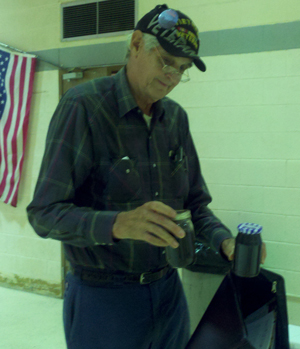
Farmer shows dirty water which came from his well after fracking on his land

NE Ohio farmer shows OFU members one jar of fracking fluid and another jar of water he said came from his well after fracking on his land.

One of the issues sure to be on the radar of the Ohio Farmers Union for some time to come is the Ohio’s natural gas boom.

How long the industrial and economic activity lasts – and what the lasting environmental consequences will be — are just two of the many questions OFU and others are asking.

OFU’s current policy statement concerns the method by which natural gas drillers will extract gas from the ground. So-called hydraulic fracturing, or “fracking,” will be used to exploit the Marcellus and Utica Shale gas formations. For now, drilling will occur primarily in Eastern Ohio.

Lying thousands of feet below the earth’s surface, natural gas is embedded in the pores of the shale. Fracking technology allows well drillers to bore vertically for hundreds or thousands of feet and then bore horizontally for up to a mile. At extremely high pressure, fracking fluid, also called drilling fluid, is forced down the well where it creates fractures in the rock, releasing the gas to be collected. The fluid is mostly water and sand but does include chemicals.

Fracking proponents say that their drilling activity is so far beneath the water table that the chances for them to pollute groundwater are slim to none. They also point to industry practices of hauling away drilling site waste water by the truckload to be recycled or for disposal. Opponents point to evidence of environmental havoc being created in states like Pennsylvania where the gas boom is already well underway. They complain of clear cutting, truck and machinery traffic wearing on rural roads and noise and water pollution.

OFU’s current policy on fracking states:

OFU calls on the Ohio Department of Natural Resources to assure that the oil and gas drilling practice known as “hydraulic fracturing” or “hydro-fracking” is regulated to protect the health of Ohio citizens and the quantity and quality of Ohio’s groundwater.

What this means going forward, and whether OFU bolsters the policy, hinges on several potential policy prescriptions which could be addressed by the Ohio General Assembly in the next several months.

“What the Farmers Union is looking for from the legislature and the Kasich Administration is twofold. We want transparency in place regarding what natural gas companies are putting into the ground and how they dispose of their waste, and we want to know that rural landowners are protected and dealt with fairly,” said Roger Wise, OFU president.

[Read more…]

Filed Under: Blog Tagged With: Fracking, Marcellus, Ohio Farmers Union, Ohio Natural Gas, Roger Wise, Shale, Utica

« Previous Page
Next Page »
  • Email
  • Facebook
  • RSS
  • YouTube

Latest News from the Ohio & National Farmers Union

OFU Rallies for Rural Schools

Fair School Funding Plan Integral for Rural Public Schools COLUMBUS – The League of Women Voters of Ohio and Ohio Farmers Union held a Statehouse … Read More

Public Schools Build Connections in Rural Communities. Vouchers Tear Them Down.

by Melissa Cropper, president, Ohio Federation of Teachers This op-ed was orignally published on Barn Raiser: Rural communities depend on … Read More

National Farmers Union Week of Action for Strong Farm Bill

National Farmers Union (NFU) today concluded the Week of Action that gathered more than 100 farmers from across the country to the halls of Congress … Read More

How Do Tariffs Affect Family Farms?

A Talk in Kent, Ohio with Ohio Farmers Union and Others Have you noticed the price of eggs? Who hasn’t! How do government actions and tariffs … Read More

Check Out the Entire Blog

NATIONAL FARMERS UNION

Click to Take Action


Contact

Ohio Farmers Union
P.O. Box 363
1011 N. Defiance Street
Ottawa, Ohio 45875
Phone: (419) 523-5300
Toll Free: (800) 321-3671

Copyright Ohio Farmers Union© 2025 | Site by: RCS Communications


Loading Comments...