Ohio Farmers Union

Serving Family Farmers and Consumers Since 1934


United to Grow Family Agriculture Since 1934

  • About
    • The Farmers Union Triangle
    • Vision
    • OFU Leadership
  • Issues
    • 2020 Virtual Lobby Days
    • OFU Policy & NFU Policy
    • 2019 Lobby Day Registration
    • Get Involved!
    • NFU Climate Leaders
  • Education
    • 2019 OFU Essay Contest
    • Ohio Farmers Union Scholarships
    • Farm Safety
    • Renewable Energy Curriculum
  • Insurance
    • Hastings Mutual Insurance Co.
    • Health & Other Offerings
    • Ohio BWC Group Coverage
  • Join Us
    • Member Benefits
    • Insurance
  • Blog

Senate Dems bill to prevent automatic budget cuts relies heavily on cutting direct payments

February 16, 2013 By Ron Sylvester Leave a Comment

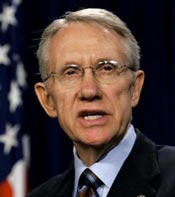
HarryReidU.S. Senate Majority Leader Sen. Harry Reid, (D-NV), announced late last week that Democrats will offer a $110 billion proposal to avert so-called sequestration cuts on March 1.

The sequester is a package of drastic, across the board cuts to domestic programs including defense that was passed during the debt ceiling fiasco of 2011. Sequestration was designed to play out over ten years with the first cuts coming on Jan. 1. That deadline was pushed back by the early January fiscal cliff deal. Congress has not been able since then to address these automatic cuts. With the March deadline looming, Senate Democrats are proposing to nullify this year’s cuts and put in their place a balanced package of targeted cuts and tax increases on wealthy Americans.

Here’s where it gets interesting for agriculture and potentially for the future of the Farm Bill. According to Politico, $27.5 billion of Reid’s plan would come by cutting the direct payments under the USDA:

About $31 billion would be saved by cutting direct cash payments to producers — a system that is widely criticized at a time of high farm income. And to win support from Senate Agriculture Committee Chairwoman Debbie Stabenow (D-Mich.), the bill reallocates about $3.5 billion of these savings to extend farm programs left hanging by the White House and Senate Republicans in the New Year’s tax deal.

Although the $3.5 billion in funding for conservation and other programs not currently funded due to the lack of a Farm Bill would be nice, there are some questions that come to mind by dealing with the direct payments issue outside of a comprehensive, federal Farm Bill.

First, it should be noted that most actual farmers and ranchers have wanted to see the direct payments system go away or wholesale reformed for a long time. There have been Hollywood celebrities, real estate speculators and other non-farmers who have collected payments because they own land – that’s not why the payments were originally created. These payments are a part of a larger safety net for agriculture ensuring that farmers produce during the lean times as well as times like those we’re living through now. (Unless you’ve been affected by drought or other natural disaster.) In the bipartisan, Senate-passed bill last year, direct payments were replaced with a revamped crop insurance program. Does the current Democratic proposal contain the crop insurance provisions? We’ll be watching.

Second is the Farm Bill itself. Farm bills have never been easy for Congress – regional conflicts erupt over this program or that program – but they’ve always gotten done. One reason is the nutrition title which includes the Supplemental Nutrition Assistance Program (food stamps) and school nutrition provisions. The nutrition title doesn’t just bring rural and urban/suburban America together because of SNAP – although that’s true and there are no doubt many an urban member of Congress who votes for farm bills just because of SNAP. The nutrition title also creates an important link between producers and eaters. They call it a system of food for a reason. The nutrition title, in an otherwise producer-oriented bill sends the message that all Americans should care about the parts of their food system, even the ones that they don’t see.

So the second question is, if you split out the most controversial part of the producer-side of the Farm Bill and essentially solve it in many Americans’ eyes – what’s to become of the rest of the bill? The political hot potato last year was SNAP. The Tea Party Republicans in the House, backed by House Speaker John Boehner, (R-OH), prevented the bill from getting to the floor for a vote. They want SNAP cut drastically. SNAP was essentially preserved in that bipartisan Senate bill due to the end of direct payments and other measures. If we “waste” the opportunity by doing away with direct payments outside of the confines of a Farm Bill, are we taking an important progressive bargaining chip off the table to strike another compromise on agriculture’s flagship legislation later this year?


 

Filed Under: Blog Tagged With: Farm Bill, Harry Reid, Sequestration

Roger Johnson Reacts to State of the Union

February 12, 2013 By Ron Sylvester 1 Comment

NFU President Roger Johnson

NFU President Roger Johnson

WASHINGTON  – National Farmers Union President Roger Johnson released the following statement after President Barack Obama’s State of the Union address this evening:

“NFU applauds President Obama and the administration’s commitment to address our budget deficit through both reasonable revenue increases and responsible spending reductions. In order for important programs to continue to be effective, another round of withering cuts through sequestration must be prevented.

“As the president stated, we have purchased less foreign oil than we have in 20 years. Farmers and ranchers are leading the way in the clean energy revolution, providing feedstocks to advanced biorefineries and harnessing the wind and sun to power the country as well as their own operations.

“The president’s call for Congress to pass a market-based solution to climate change is also very encouraging. Extreme weather events like the current drought are hurting America’s farmers and ranchers ability to provide the nation with food, feed, fiber, and fuel. Given the right incentives, agriculture can play a significant role in combating climate change by being a part of the solution.

[Read more…]

Filed Under: Blog

NFU Releases Analysis on COOL Compliance

February 12, 2013 By Ron Sylvester Leave a Comment

WASHINGTON  – National Farmers Union and the United States Cattlemen’s Association, released a legal analysis today that details the available options for successful U.S. compliance of a recent World Trade Organization (WTO) ruling on County-of-Origin labeling (COOL).

“The comprehensive legal analysis demonstrates that the USDA can come into compliance with the WTO appellate body ruling by amending the COOL regulations,” NFU President Roger Johnson said. “Changes to the COOL legislation are not necessary to achieve compliance. U.S. producers are rightfully proud of their products and consumers want to know where their food comes from. Additionally, these remedies should not result in any increase in consumers’ retail prices. Achieving compliance is a win-win situation for all interested parties.”

The analysis essentially concluded that an effective way of complying with the WTO decision is to simply provide more information and more accurate details to consumers. It would not require producers or processors to collect additional information; it would merely require strengthening the regulations so that the information is provided to the consumer.

The WTO recently required the U.S Department of Agriculture (USDA) to adjust its rules requiring American retailers to label certain foods with the country (or countries) in which the animals are born, raised, or slaughtered. The WTO said that while the United States can require meat labeling, current U.S. COOL rules do not meet WTO standards. The WTO has given the United States until May 23, 2013 to bring its COOL rules into compliance.

“Based on the analysis, we stand in support of tightening U.S. COOL regulations,” said USCA President Jon Wooster. “USCA is proud of our U.S. raised products and remain committed to this issue, while continuing to vigorously advocate for U.S. cattle producers as well as every consumer’s right to information regarding where their meat products originate and are raised.”

COOL was passed as a part of the Farm Security and Rural Investment Act of 2002 and amended in the 2008 Farm Bill, going into effect in 2008, with regulations being put forward in 2009.

Read or Download the Memo Here

Filed Under: Blog

Montana’s Tester Leading Bipartisan Group Fighting for COOL

February 7, 2013 By Ron Sylvester Leave a Comment

tester213

U.S. Sen. Jon Tester (D-MT)

Senators Jon Tester (D-Mont.), Mike Enzi (R-Wyo.), and Tim Johnson (D-S.D.) are leading a bipartisan coalition of Senators in calling on the U.S. Department of Agriculture and the U.S. Trade Representative to work with consumers, ranchers and meatpackers to make sure that American families know where their meat comes from.

The National Farmers Union is commending the group for fighting for consumers’ right to know and American farmers.

“We thank Senator Tester for his work in garnering support in the Senate in regards to COOL compliance,” said NFU President Roger Johnson. “Consumers have a right to know where their food comes from and U.S. farmers and ranchers want to be able to tell them.”

The World Trade Organization (WTO) recently required the USDA to adjust its rules requiring American retailers to clearly label where meat was raised and processed. The WTO said that while the United States can require meat labeling, current U.S. Country-of-Origin labeling (COOL) rules do not meet WTO standards. The WTO has given the United States until May 23, 2013, to bring its COOL rules into compliance.

“USDA and USTR should take even stronger regulatory actions to make sure that COOL provides meaningful information about the origins of meat and other products,” said Johnson.

“Congress intended that COOL provide as much information as possible about the origin of all meat cuts to consumers,” the senators wrote to U.S. Secretary of Agriculture Tom Vilsack and U.S. Trade Representative Ron Kirk. “Some flexibility is needed, but such flexibility cannot come at the expense of providing reliable information to families about the national origin of meat products.”

The bipartisan coalition also said that USDA should host a public comment period to allow agriculture workers and consumers to weigh in on any new proposals.


Filed Under: Blog Tagged With: COOL, Jon Tester, Mike Enzi, Tim Johnson, WTO

NFU Releases New “Farmer’s Share” Report

February 7, 2013 By Ron Sylvester Leave a Comment

farmershare213

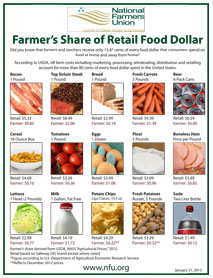
National Farmers Union released its latest Farmer’s Share earlier this week. The report is based on calculations derived from the monthly Agriculture Prices report produced by the U.S. Department of Agriculture’s (USDA) National Agricultural Statistics Service (NASS), and compared to price points of common grocery food items at a local Washington, D.C., Safeway supermarket.

“It’s easy to forget the true value of our farmers and ranchers, who in some cases are only making pennies to the dollar on their goods, while we’re at our local supermarket,” said NFU President Roger Johnson. “Our Farmer’s Share report reflects the true value that our farmers and ranchers are receiving.”

According to USDA’s Economic Research Service, farmers and ranchers only receive 15.8 cents of every food dollar spent by consumers outside the home in the United States. Additionally, more than 80 cents of every food dollar is spent on marketing, processing, wholesaling, distribution and retailing.

Among the more startling statistics noted in the January Farmer’s Share:

  • Dairy farmers received $1.72 for one gallon of fat free milk (retail price: $4.19);
  • Wheat farmers netted only 19 cents of the $2.99 retail price of a loaf of bread; and
  • Tomato growers received a mere 36 cents per pound (retail price: $3.28).

“The Farmer’s Share shows the consumer that prices may increase in the grocery store, however the farmer is not necessarily receiving extra income. This is critical information that every consumer should be aware of,” said Johnson. “It is also a stark reminder that U.S. family farmers and ranchers need certainty and Congress’ inability to pass the 2012 Farm Bill directly will impact their operations.”

Click here for a downloadable, printable Farmer’s Share page.


Filed Under: Blog Tagged With: Farmer's Share, National Farmers Union

USDA: Farm to School Grant Applications for FY 2014 Being Accepted

February 7, 2013 By Ron Sylvester Leave a Comment

farmtoschool


WASHINGTON, D.C., Feb. 6, 2013 – Agriculture Deputy Secretary Kathleen Merrigan today announced the release of a request for applications (RFA) for the latest round of USDA’s Farm to School grants. These grants help eligible schools improve the health and wellbeing of their students and connect with local agricultural producers.

“USDA’s Farm to School grants connect schools with their local farmers, ranchers and food businesses, providing new economic opportunities to food producers and bringing healthy, local offerings into school cafeterias,” said Merrigan. “USDA continues to make improvements to the nutrition of food offered in schools, and investing in farm to school programs is yet another important opportunity to encourage our nation’s kids to make lifelong healthy eating choices.”

[Read more…]

Filed Under: Blog Tagged With: Farm to School, Kathleen Merrigan, USDA

USDA Announces Updates to MILC Program

February 7, 2013 By Ron Sylvester Leave a Comment

milk200

WASHINGTON, Jan. 30, 2013—U.S. Department of Agriculture (USDA) Farm Service Agency (FSA) Administrator Juan Garcia today announced that beginning Feb. 5, USDA will issue payments to dairy farmers enrolled in the Milk Income Loss Contract (MILC) program for the September 2012 marketings. The American Taxpayer Relief Act of 2012 extended the authorization of the Food, Conservation, and Energy Act of 2008 (the 2008 Farm Bill) through 2013 for many programs administered by FSA, including MILC. The 2008 Farm Bill extension provides for a continuation of the MILC program through Sept. 30, 2013.
MILC payments are triggered when the Boston Class I milk price falls below $16.94 per hundredweight, after adjustment for the cost of dairy feed rations. MILC payments are calculated each month using the latest milk price and feed cost.
[Read more…]

Filed Under: Blog Tagged With: MILC

USDA Commodity Credit Corp. Loan Rates for 2013 Crops

February 7, 2013 By Ron Sylvester Leave a Comment

chart350
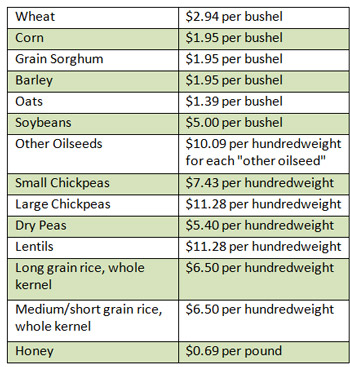
The Commodity Credit Corporation (CCC) today announced county loan rates for the 2013 crops of wheat, corn, grain sorghum, barley, oats, soybeans and other oilseeds (sunflower seed, flaxseed, canola, rapeseed, safflower, mustard seed, crambe and sesame seed); national milled loan rates and state loan rates by class for the 2013 rice crop; regional loan rates for 2013 pulse crops (small chickpeas, large chickpeas, dry peas and lentils); and the national loan rate for the 2013 honey crop. The rates are posted on the Farm Service Agency (FSA) website at www.fsa.usda.gov/pricesupport.

Filed Under: Blog Tagged With: CCC, Loan Rates, USDA

Marketing Assistance Loans and Loan Deficiency Payments for 2013 Crop Year

February 5, 2013 By Ron Sylvester Leave a Comment

usda-fsa

The marketing assistance loan (MAL) and loan deficiency payment (LDP) provisions authorized in the Food, Conservation and Energy Act of 2008 (the 2008 Farm Bill) have been extended for the 2013 crop year with the passage of the American Taxpayer Relief Act of 2012.

MALs and LDPs provide financing and marketing assistance for wheat, rice, feed grains, soybeans and other oilseeds, peanuts, pulse crops, cotton, honey and wool. Assistance is available to eligible producers beginning with harvest or shearing season and extending through the program year. The 2013 mohair crop is not eligible for MALs or LDPs because mohair provisions were suspended by the Consolidated and Further Continuing Appropriations Act of 2012 and the Continuing Appropriations Resolution, 2013.

MALs provide producers interim financing at or after harvest to help them meet cash flow needs without having to sell their commodities when market prices are typically at harvest-time lows. A producer who is eligible to obtain a loan, but agrees to forgo the loan, may obtain an LDP if such payments are available.

For more information about marketing assistance loan and loan deficiency payments, please visit your FSA county office or FSA’s Ohio website.

Filed Under: Blog Tagged With: FSA, Loans, USDA

2013 Policy Priorities Set by OFU

January 30, 2013 By Ron Sylvester Leave a Comment

rogernsandra

OFU President Roger Wise and wife Sandra at the January 26 policy hearing at the OFU Annual Convention.

COLUMBUS – Severance taxes, the Ohio Turnpike and ag nutrient pollution are among the policy initiatives in the spotlight for The Ohio Farmers Union, a 5,000 member family farm and consumer advocacy group.

New state and federal level public policy positions are made by OFU each January at its annual convention. Gone from last year’s policy list is a call for a moratorium on fracking in Ohio until the U.S. EPA issues a report on horizontal drilling’s effects on the environment.

“We’ve removed our moratorium request due to the fact that the EPA report is still not complete. We have members in shale counties who stand to benefit from responsible well-drilling, but we also have members greatly concerned about what we don’t know about what fracking will do to water supplies,” said Roger Wise, OFU president.

“We will continue to urge lawmakers to protect farmers and rural landowners and our air and water first. Our new policy position requests that the U.S. EPA include water quality in its ongoing study.”

At the state level, OFU is supporting the Kasich Administration’s Ohio Turnpike plan with two caveats: First, that northern Ohio be defined as territory north of U.S. 224 and second that the Ohio General Assembly codify Administration pledges to keep 90 percent or more of Turnpike bond and other revenue in northern Ohio.

OFU is also supportive raising severance taxes in the state, but differs with Kasich on where new revenue should go.

[Read more…]

Filed Under: Blog Tagged With: OFU Convention, Ohio Grain Indemnity Fund, Ohio Turnpike, Roger Wise, Severance Taxes

« Previous Page
Next Page »
  • Email
  • Facebook
  • RSS
  • YouTube

Latest News from the Ohio & National Farmers Union

OFU Rallies for Rural Schools

Fair School Funding Plan Integral for Rural Public Schools COLUMBUS – The League of Women Voters of Ohio and Ohio Farmers Union held a Statehouse … Read More

Public Schools Build Connections in Rural Communities. Vouchers Tear Them Down.

by Melissa Cropper, president, Ohio Federation of Teachers This op-ed was orignally published on Barn Raiser: Rural communities depend on … Read More

National Farmers Union Week of Action for Strong Farm Bill

National Farmers Union (NFU) today concluded the Week of Action that gathered more than 100 farmers from across the country to the halls of Congress … Read More

How Do Tariffs Affect Family Farms?

A Talk in Kent, Ohio with Ohio Farmers Union and Others Have you noticed the price of eggs? Who hasn’t! How do government actions and tariffs … Read More

Check Out the Entire Blog

NATIONAL FARMERS UNION

Click to Take Action


Contact

Ohio Farmers Union
P.O. Box 363
1011 N. Defiance Street
Ottawa, Ohio 45875
Phone: (419) 523-5300
Toll Free: (800) 321-3671

Copyright Ohio Farmers Union© 2025 | Site by: RCS Communications


Loading Comments...