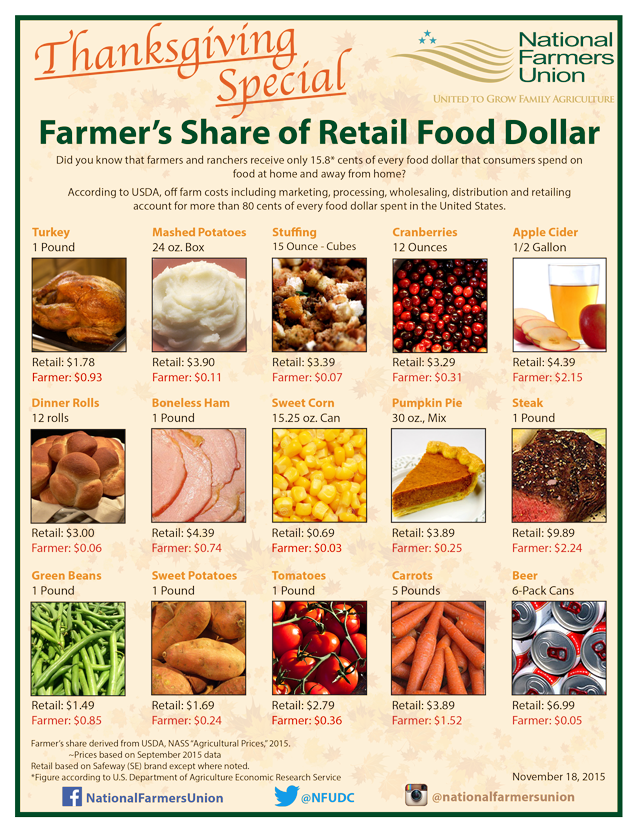
Affordable Care Act Open Enrollment Info Updated
It’s open enrollment time once again for ACA health care coverage and the Ohio Farmers Union can help you navigate the health insurance marketplace. Use this form to get started with Dave Shindollar who will help you qualify for subsidies and find you the best value for your health and your money! Open enrollment ends January 31, 2015.
Ohio BWC Sets Date for Safety Congress-Expo
 The Ohio Bureau of Workers Compensation has set the date and place for the 2016 Ohio Safety Congress & Expo.
The event will be held March 9-11 at the Greater Columbus Convention Center, Columbus, Ohio. BWC has informed employers through a save the date email. Registration is not yet available, however the agency said registration will be available in January.
Admission will be free.
UPDATE: Crop Insurance Payments Will Be Restored in Future Bill
A budget agreement negotiated between the White House and congressional leaders that was passed by the House yesterday did contain $3 billion in cuts to the federal subsidies for the nation’s crop insurance program, but, House ag interests said that the cuts will be rolled back in a future spending bill.
National Farmers Union President Roger Johnson voiced cautious optimism Wednesday night about the deal and said the agreement was led by the House Agriculture Committee.
“No one involved in agriculture was consulted when the budget was being negotiated,” said Johnson. “It’s outrageous to think that the agriculture committees were completely left in the dark, but we are thankful that the committee, its members, and other members of Congress stood up for a program that is critical to family farmers.”
Johnson noted that the 2014 Farm Bill provided $24 billion in savings, which accompanies the $12 billion in savings that was part of the 2011 renegotiation of the Standard Reinsurance Agreement (SRA). “While the rest of Congress has been paralyzed, the agriculture committees delivered savings in the name of deficit reduction,” he said. “It would be shameful to punish agriculture for doing its job over the last several years.”
Absent this deal, the budget would require $3 billion in cuts to the reimbursement rates between the government and the companies that sell and administer the crop insurance program. The cut, from 14 percent to 8.9 percent, is far deeper than the 12 percent of previous proposals. However, the average rate of return for participating companies has been less than 4 percent, causing many crop insurance companies to exit the sector.
“Caps already exist on administrative and operating costs for crop insurance companies, and producers pay an estimated $4 billion into this program annually. It’s time for Congress to realize that crop insurance is not a piggy bank,” noted Johnson. “We are thankful for our allies in the House and the leadership of Chairman Conaway and Ranking Member Peterson.”
“We now call on the Senate leadership to follow the House’s lead and reject cuts to crop insurance,” he said.
Budget Deal Contains Horrible Crop Insurance Provision
 One would think that if Congress were to take $3 billion out of the private sector crop insurance delivery system there would be hearings and lots of work done on the economics of the proposal by both sides of the issue.
You would be wrong to think that, because tomorrow there will be a vote in the U.S. House to accept a budget deal which contains what amounts to a $3 billion cut in the crop insurance subsidies that are so critical to the U.S. farm safety net.
According to the legislative shop at the National Farmers Union, this bit of business is such a surprise that both the House and Senate Agriculture Committees are lining up to oppose the entire budget deal if it contains this cut. NFU staff are all hands on deck canvassing members of Congress and senators all day today to oppose the deal.
 The national budget can’t be balanced on the backs of farmers. While it is true that this money will come out of the insurance industry, it’s also true that there will be a trickle down effect in rural America. The compromises that took so many years to forge in the last Farm Bill set up what is essentially a public-private system behind the safety net. It can’t just be torn down in a day.
Here’s a quote from an email I received today from a staffer at NFU that sums it up nicely:
While this is a direct hit to crop insurance companies, there can be no doubt about the trickledown effect onto the countryside. Consolidation is already occurring in the crop insurance industry, and this will only speed up that consolidation, which will mean fewer choices and a less efficient private sector delivery system for producers.
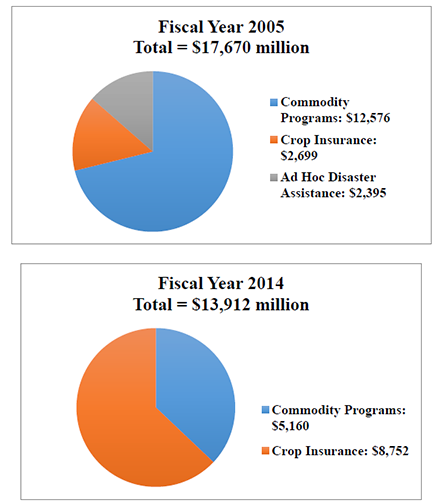
And, if you think that farmers haven’t already done their piece for the national budget, consider the two charts pictured here. They speak for themselves.
Call your member of Congress and both of our U.S. Senators – Sherrod Brown and Rob Portman. You may call the Capitol Switchboard at (202) 224-3121 and ask for your representative or one of the senators. Tell them to vote NO on the budget deal if it contains the cut to the Private Sector Delivery System to Crop Insurance.
This is horrible policy and should be a poison pill to kill the whole deal.
Here’s more information:
Great Job Opportunity for a Farm Manager
 Miami University is hiring a farm manager to help develop and to work on our new organic/sustainable farm which will be part of the new Miami University Food Studies Institute in Oxford, Ohio.
Brown, Kaptur Honored by NFU While Logan and Ohio Members Lobby Congress on Trade, COOL
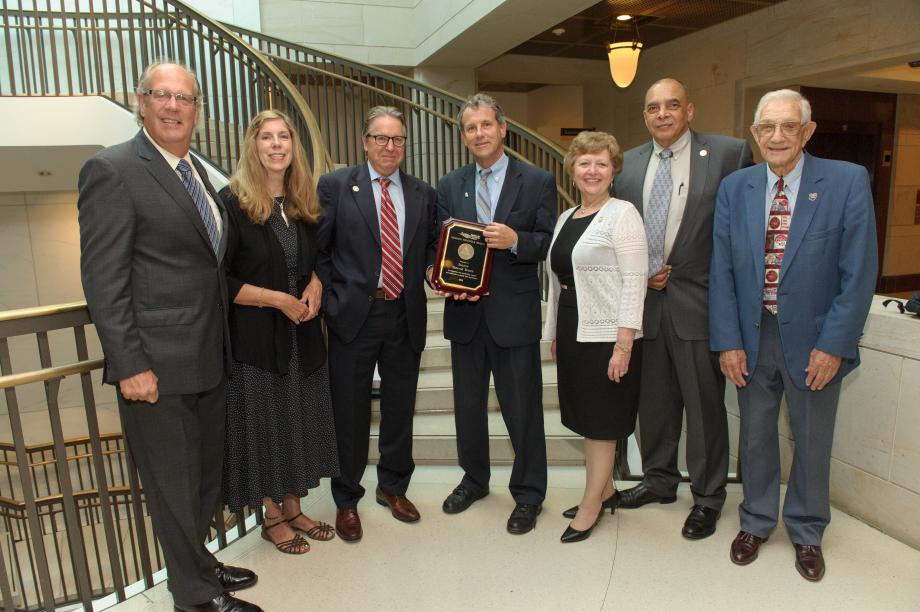
U.S. Sen. Sherrod Brown, center-right, holds 2015 Golden Triangle Award given to him by the National Farmers Union. Roger Johnson, NFU president, and members of the Ohio Farmers Union stand with Brown.
COLUMBUS – Ohio Farmers Union President Joe Logan and a delegation of OFU members have returned to Ohio after a week in Washington, D.C. lobbying members of Congress on Country of Origin Labeling and the pending Trans Pacific Partnership trade pact.
The OFU group was there as part of the National Farmers Union Legislative Fly-In. NFU also honored U.S. Sen. Sherrod Brown, D-OH, and U.S. Rep. Marcy Kaptur, D-9th District with Golden Triangle awards. The Ohio pair were two of 36 senators and members of Congress honored last week.
“Recipients of the Golden Triangle Award have been strong advocates for family farmers and ranchers, and support similar principles and policies as Farmers Union,” said NFU President Roger Johnson. “We are pleased to honor those who have proven to be true allies of our organization and family agriculture.”
As for the issues, Logan said that Ohio’s family farmer delegates met with several members of Ohio’s Congressional delegation.
“We focused on Country of Origin Labeling (COOL), the Trans Pacific Partnership (TPP) and U.S. EPA’s flawed ethanol blending targets for 2015 and 2016,” Logan said.
“We urged members to vote “no” on TPP and demand that EPA follow the law on the Renewable Fuel Standard which sets the ethanol blending targets,” he said.
Logan said recent action by the U.S. House to repeal COOL was disappointing. The Senate has not taken up the measure, so OFU members used their time with legislators to explain what Logan calls “the whole story on COOL.”
“Most members of Congress didn’t realize that there is public polling showing that an overwhelming majority of American consumers support knowing where their food comes from. Furthermore, they had no idea that the World Trade Organization’s opposition to U.S. COOL was enacted in an un-democratic and non-transparent process,” Logan said.
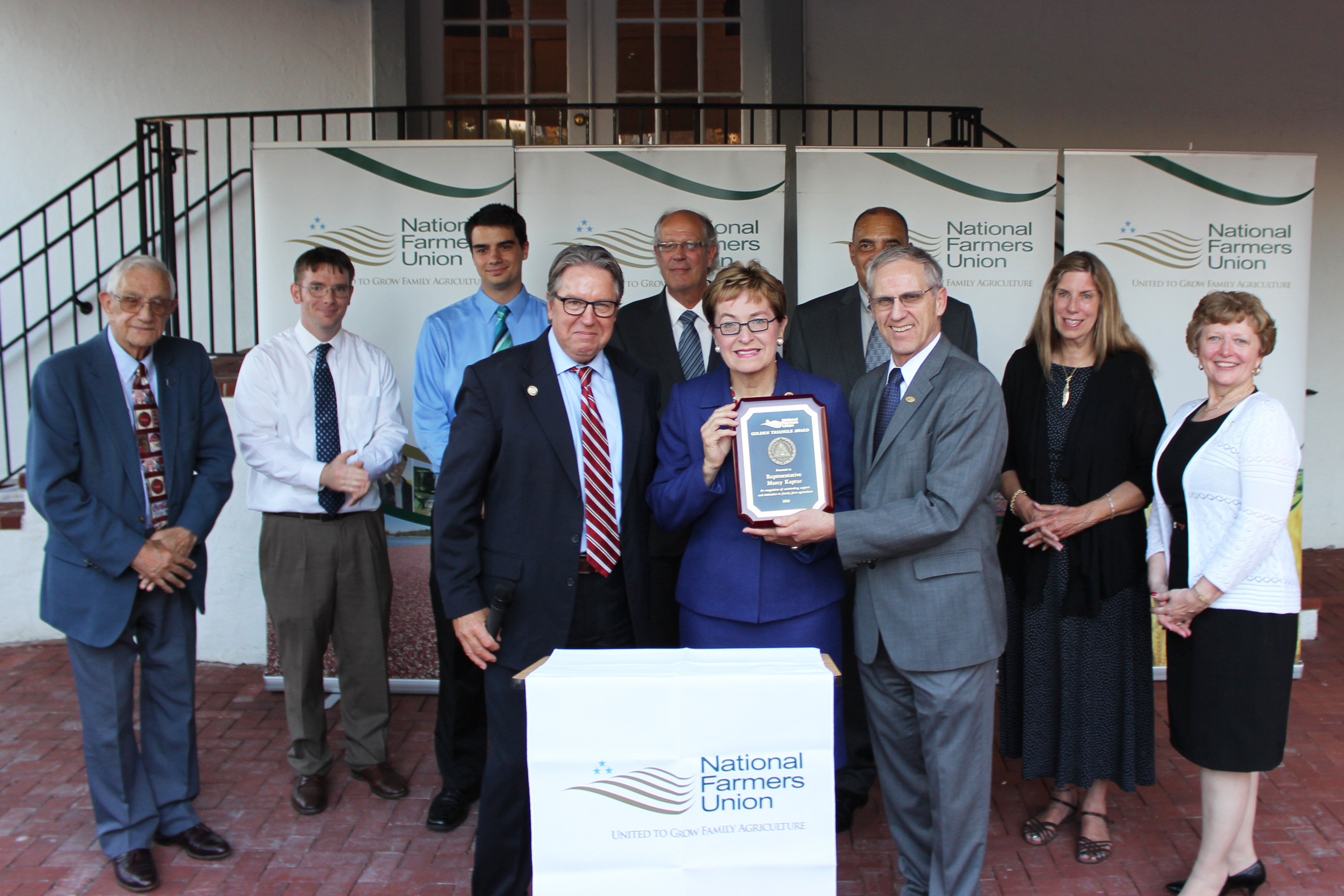
U.S. Rep. Marcy Kaptur, flanked by OFU President Joe Logan, left, and NFU President Roger Johnson, right, receives NFU’s Golden Triangle Award for 2015.
Logan and others made the case that national pork and beef promotion organizations have been captured by an increasingly smaller number of huge trans-national corporations that want to be able to bombard the U.S. market with the lower-priced inferior quality meats from countries like China and Brazil.
“If COOL goes by the wayside, it will be much easier for these big foreign companies to replace U.S. grown and processed meat with beef from Brazil and pork from China,” Logan said.
Logan also praised both Brown and Kaptur.
“Sherrod and Marcy are both long-time supporters of family farmers through thick and thin,” Logan said. “Marcy Kaptur has actually been honored by National Farmers Union more than any other legislator. She is a star for family farmers.”
“For decades, independent farmers in Ohio and throughout the country have suffered hardship and injustice at the hands of the powerful and heavily integrated corporate meat industry,” said Kaptur. “I have learned that the U.S. Department of Agriculture is ready to move forward with long-overdue protections for those farmers. I am humbled to receive this distinguished award from the National Farmers Union, whose work advocating on behalf of independent farmers could not be more critical. But even more importantly, I am gratified that this shared effort has brought us closer than ever to expanding critical protections for our nation’s meat and poultry farmers. Thank you to NFU President Roger Johnson, Ohio Farmer’s Union President Joe Logan, and the many farmers, ranchers, experts and advocates whose sacrifice, sweat and labor made all of this possible.”
“Our state’s prosperity – and economic and energy security – depends on the strength of Ohio’s agriculture sector,” Brown said. “I will continue working alongside Ohio’s farmers and producers to expand market opportunities, maintain a strong and fiscally responsible safety-net, and strengthen rural communities.”
OFU: Moratorium in Order for Class II Injection Wells
 OFU President Joe Logan said that the Board of Directors of the Ohio Farmers Union has issued a call for a moratorium on new Class II injection wells in Ohio.
Logan said the policy position emanated from members with farms in northeast Ohio and has gained traction as several county commissioners, township trustees and municipalities have entertained public forums and resolutions on issues with these wells.
“Many of us who live and work our farms near Class II wells are truly concerned about spills and accidents that have occurred and the fact that many of these wells are older infrastructure being put back into use due to increased fracking in Eastern Ohio and neighboring states,” Logan said.
“Eastern Ohio has become a dumping ground for fracking waste from surrounding states and we don’t believe the state’s inspection and public health and safety infrastructure and staffing has kept up with events in Eastern Ohio. The public would be better served by not allowing any further development of Class II sites for frack waste until Ohio establishes a program mandating air and water quality monitoring around injection wells along with a reporting requirement for disposed material” Logan said.
Logan said that Class I disposal well regulations, overseen by Ohio EPA, are more robust therefore creating an environment where accidents creating groundwater and soil pollution are less likely.
“We propose any new disposal wells intended for waste from horizontal hydrofracturing should meet Class I standards,” Logan said.
OFU: No on Pot Cartel; Yes on Redistricting in Election 2015
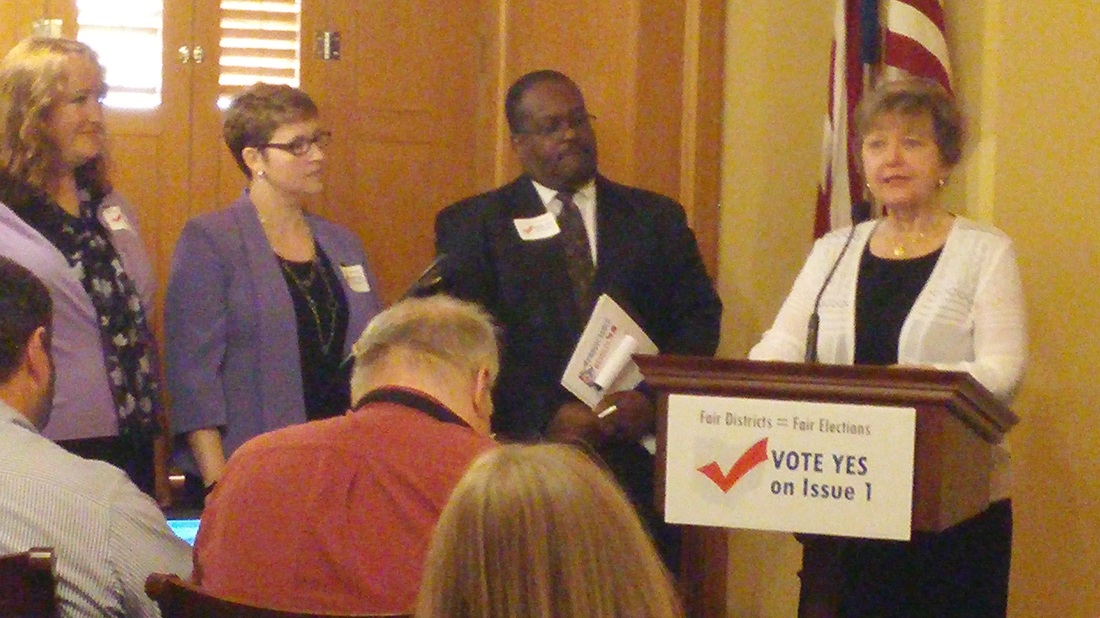
OFU Executive Director Linda Borton speaks on behalf of State Issue 1 at a recent League of Women Voters-Common Cause Ohio news conference in Columbus.
The Ohio Farmers Union has endorsed State Issue 1 and is asking members to reject State Issue 3 on Election Day this November.
“When the Democrats drew the lines, Republicans demanded reform. When the Republicans draw the lines, the Democrats call for change – now there is a new and real call to bipartisanship, Issue 1,” said OFU Executive Director Linda Borton.
Borton said that OFU’s board of directors was impressed by the focus on transparency of State Issue 1.
“It’s no secret that our current state legislative districts and past maps drawn by both parties were formed in back rooms, downtown Columbus hotels and generally away from the light of day and the general public,” Borton said.
Borton said State Issue 1 creates more transparency in the process through a system of public hearings and by opening district maps to public comment before they are voted on by the proposed Redistricting Commission. It also calls for the minority party to be more involved throughout the process – not just there to vote “No” on the majority’s map.
While the language of State Issue 1 is loose enough to allow a majority party to continue the unfair practices of the past, OFU believes that the transparency changes and minority party standing in the process will ensure a heavy public price is paid for unfairness. OFU is also heartened by the fact that State Issue 1 grants the minority party a legal remedy for maps that are unfair and that separate communities.
“We like the fact that the Redistricting Commission would have to reconvene after two years with a disputed map, rather than just allowing a bad map to stand for 10 years,” Borton said.
OFU is also urging a “No” vote by members on State Issue 3 the marijuana legalization bill.
Notice for OFU CareWorksComp Members
The Ohio Farmers Union provider for Ohio Bureau of Workers Compensation group coverage is CareWorksComp. They’ve asked us to pass along a couple of notes regarding Ohio BWC’s new invoicing process for businesses. Please read the PDF document below: