Ohio Farmers Union

Serving Family Farmers and Consumers Since 1934


United to Grow Family Agriculture Since 1934

  • About
    • The Farmers Union Triangle
    • Vision
    • OFU Leadership
  • Issues
    • 2020 Virtual Lobby Days
    • OFU Policy & NFU Policy
    • 2019 Lobby Day Registration
    • Get Involved!
    • NFU Climate Leaders
  • Education
    • 2019 OFU Essay Contest
    • Ohio Farmers Union Scholarships
    • Farm Safety
    • Renewable Energy Curriculum
  • Insurance
    • Hastings Mutual Insurance Co.
    • Health & Other Offerings
    • Ohio BWC Group Coverage
  • Join Us
    • Member Benefits
    • Insurance
  • Blog

OSU Extension: Corn, soybean input costs expected to climb 20% in 2012

October 18, 2011 By Ron Sylvester Leave a Comment

The following was released by the Ohio State University Extension on October 17, 2011.

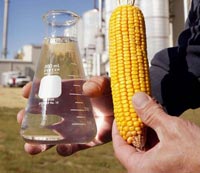
COLUMBUS, Ohio – Led by increases in fertilizer and seed, farmers can expect to spend as much as 20 percent more to produce corn and soybeans in 2012 than they did in 2011, according to Ohio State University Extension experts.

“We’re expecting to see input costs increase somewhere between 5 and 20 percent, depending on the crop and the level of inputs relative to the quality of land farmed,” said Barry Ward, leader of the Production Business Management program in the Department of Agricultural, Environmental and Development Economics. “There will be increases, in some cases substantial increases, but this is not unexpected. Most growers are already seeing it showing up in planning for 2012 as farmers make pre-purchases.”

Ward said increases in the cost of fertilizer and seed are the key drivers of the expected increases, reflected in newly released enterprise budgets developed at Ohio State. Extension professionals develop the annual enterprise budgets as guidance for farmers planning the next year’s crop.

“We’ve seen enough significant increases in fertilizer costs that it will be a pretty big bump over last year,” he explained. “The way fertilizer prices have been moving, it’s been purely demand driven. With worldwide crop prices being high, fertilizer prices are staying relatively well correlated with commodity prices.”

That correlation is the market’s way of telling farmers “not to skimp on fertilizer,” according to Ward. He said farmers in the U.S. compete with agricultural sectors in competitive countries like Brazil and China for many crop inputs, but especially for fertilizer. That demand drives the cost of the product.

Ward said other energy-related crop inputs, however, will see only moderate increases, if prices appreciate at all.
[Read more…]

Filed Under: Blog Tagged With: Corn, Inputs, Ohio Agriculture, Ohio State University Extension, Soybeans

Ag News Roundup – October 18, 2011 – Subsidies, Conservation, Federal Budget

October 18, 2011 By Ron Sylvester Leave a Comment

When one farm subsidy ends, another to take its place

New York Times

…

Direct payments have come under fire, however, because farmers get them whether markets are high or low. The new subsidy, called shallow-loss protection, would act as a free insurance policy to cover commodity farmers against small drops in revenue.

Most commodity farmers already buy crop insurance to protect themselves against major losses caused by large drops in prices or damage to crops. Those policies typically guarantee 75 to 85 percent of a farmer’s revenue, with the federal government spending $6 billion a year to pay more than half the cost of farmers’ premiums. …

Read the entire article at The New York Times

Conservation Reserve Program on chopping block

Omaha World-Herald

Hunters across the Midwest have had a taste of the good old days during the past 25 years.

Habitat on millions of acres of farmland by the voluntary federal Conservation Reserve Program — which pays farmers to take marginal land out of production and return it to grassland — created ring-necked pheasants, quail, ducks, deer and wild turkeys.

Despite tough weather from drought in Kansas to hard winters in the Dakotas this year, there are still millions of ringnecks to be flushed from the grasslands, fence rows and field edges in pheasant country this fall thanks to landowners who enrolled acres in the Conservation Reserve Program years ago.

Read the rest at the Omaha World-Herald

Alternative fuel event in Orrville draws big fleets, big ideas

Farm and Dairy

Running trucks on alternative fuel and compressed natural gas is nothing new, but the infrastructure to make it practical and affordable is finally coming of age.

At an alternative fuels event held Oct. 6 in Orrville, Smith Dairy fleet manager Chuck Diehl stole the show by proposing that half of the company’s new truck funds for 2012 go toward alternative fuel vehicles, and that the company pursue the city’s first compressed natural gas refilling station to serve its own fleet, with the potential for public use at a later date.

There are more than 400 vehicles in the Smith Dairy fleet, which transport all major dairy products. If Diehl’s goal becomes a reality, then 8-10 percent of their fleet will run on alternative fuels.

“We’re suddenly asking ourselves what’s holding us back,” he said. “It’s going to sell itself.”

Read more at Farm & Dairy

Ohio Ag Law Symposium: Gray area remains in CDL law for farmers

When it comes to the need for farmers to obtain a commercial driver’s license to haul farm products or inputs, no news is good news, according to the Agricultural & Resource Law Program at Ohio State University.

“There haven’t been any changes,” said Peggy Kirk Hall, director of the Ag Law Program. “There were rumors there would be some additional federal changes to the CDL provisions, but the U.S. Department of Transportation announced there would be no changes, and provided some additional advice to clarify what was happening.”

The Ag Law Program is a research, outreach and education center supported by Ohio State University Extension.

Read the rest at the Tiffin Advertiser-Tribune

Ag Committees pick number for budget cuts

agriculture.com

Both the Senate and House agriculture committees announced Monday that they’re recommending a $23 billion reduction in farm bill spending over the next 10 years to the congressional “super committee” charged with finding more than $1 trillion in lowered federal spending.

“We are currently finalizing the policies that would achieve $23 billion in deficit reduction and will provide a complete legislative package by November 1, 2011,” the committee chairs and ranking minority party members said in a letter to the committee. “Deficit savings at this level is more than any sequestration process would achieve and should absolve the programs in our jurisdiction from any further reductions. We welcome the opportunity to explain this recommendation and the forthcoming legislative proposal upon request from the Joint Committee.”

The letter is signed by House Agriculture Committee Chairman Frank Lucas (R-OK) and the committee’s ranking Democrat, Collin Peterson of Minnesota, as well as Senate Ag Committee Chairwoman Debbie Stabenow (D-MI) and the ranking Republican, Pat Roberts of Kansas.

Read more at agriculture.com

EPA will not tighten farm dust standards

The Hill

The Environmental Protection Agency said Friday it will not tighten controls on farm dust, the latest effort to quell concerns by Republicans and others that the agency will impose new regulations on the agriculture industry.

In a letter to Sen. Debbie Stabenow (D-Mich.), EPA Administrator Lisa Jackson said she will soon recommend to the White House Office of Management and Budget that existing regulations governing coarse particulate matter from industrial and agricultural operations — often called farm dust — remain in place.

Read the rest at The Hill

FDA boosts efforts to ensure food safety

Palm Beach Post

How much more are you willing to pay for food to ensure that it is safe to eat?

While we’d like to think the nation’s food supply is already safe enough, it’s apparent that’s not the case. We know that 23 people have died recently after eating Colorado-grown cantaloupe contaminated with listeria, a deadly bacteria. The U.S. Food and Drug Administration and the Centers for Disease Control are still investigating the outbreak.

Read the rest at the Palm Beach Post


Filed Under: Blog Tagged With: Congress, Conservation, FDA, Federal Budget, Subsidies

NFU supports extending deadline for spill prevention regs

October 17, 2011 By Ron Sylvester Leave a Comment

WASHINGTON (Oct. 17, 2011) – National Farmers Union President Roger Johnson issued the following statement after the U.S. Environmental Protection Agency (EPA) announced that it has extended the deadline to implement Spill Prevention, Control and Countermeasures (SPCC) measures:

“NFU is glad that EPA has extended the deadline until May 2013 for implementation of the SPCC regulation. While it is an important goal to make sure stored oil does not spill or leak into our nation’s waterways, it is equally important that the regulation is implemented in a way that farmers and ranchers can provide appropriate safeguards in a timely manner.

“In various parts of the country, many farmers are struggling to recover from catastrophic drought and flooding. We are pleased that EPA has listened to the concerns of Farmers Union members and extended the implementation deadline. This extension is instrumental in ensuring that the agriculture community understands SPCC requirements and has time to obtain technical assistance and implement the proper safeguards for stored oil.”


Filed Under: Blog

USDA study shows conservation practices help stem movement of sediment and chemicals from farmland to Great Lakes Watershed

October 13, 2011 By Ron Sylvester Leave a Comment

Press Release from the USDA

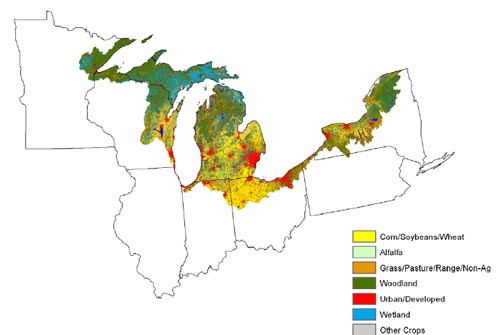
A new USDA study shows that farmers using combinations of erosion-control and nutrient-management practices on cultivated cropland are reducing losses of sediment, nitrogen and phosphorous from farm fields and decreasing the movement of these materials to the Great Lakes and their associated waterways.

“The Great Lakes Conservation Effects Assessment Project (CEAP) study confirms that good conservation planning and implementation have reduced loadings of sediment and nutrients to waterways throughout the region,” Agriculture Secretary Tom Vilsack said today. “The Administration appreciates the actions of every farmer who is stepping up to implement conservation practices, protect vital farmlands and strengthen local economies. At the same time, we also see opportunities for even further progress.”

The CEAP study, prepared by USDA’s Natural Resources Conservation Service (NRCS), estimates that the use of conservation tillage and other conservation practices has resulted in a 50 percent decline in sediment entering rivers and streams, along with 36 and 37 percent declines, respectively, in phosphorus and nitrogen loading.

[Read more…]

Filed Under: Blog Tagged With: Conservation, Farming Practices, Fertilizer, Great Lakes

Ag News Rounup – October 13, 2011

October 13, 2011 By Ron Sylvester Leave a Comment

Potato Wars on Capitol Hill

Politico

Sen. Susan Collins is a more gentle soul than your typical Republican Steering Group regular, but there she was in the Capitol last week: Ms. Maine Moderate lunching with the “Sons of Jesse Helms” — all in the name of the potato.

It was a jaw-dropping, don’t-spill-your-fries moment and a sign of the newest civil rights frontier of this dysfunctional Congress: the battle over equity among vegetables.

Read the Rest at Politco

Deal close on cut in farm subsidies

Politico

Under pressure to cut farm subsidies, Agriculture Committee leaders in Congress are closing in on a 10-year savings target near $23 billion, about a third less than what House Republicans and President Barack Obama had proposed but still a significant change.

No final announcement has been made, but the bipartisan leadership met Tuesday evening, and three lawmakers told POLITICO that they expected the final savings to be in $23 billion range.

Read the Rest at Politico

Ohio EPA to clarify water quality trading rules

Ohio Environmental Protection Agency

Updates to a program that allows voluntary trading of water quality pollution credits are being considered by Ohio EPA as part of a five-year rule review. Public comments on draft rules are sought through October 25, 2011.

Water quality trading is a voluntary program, typically undertaken by wastewater treatment plants, that allows dischargers to use pollutant reduction credits to offset reductions required by their permits. The credits may be generated by another wastewater treatment plant or by a nonpoint source. The goal of the program is to improve water quality and minimize the cost of achieving and maintaining water quality standards.

Read the Rest

Ohio Turnpike tolls to rise

Associated Press

BEREA, Ohio (AP) — Ohio Turnpike tolls are expected to go up Jan. 1, despite an earlier proposed freeze and opposition from truckers.

Turnpike Commission Chairman Jerry Hruby has said the increase, which is about 10 percent for trucks and cars, is necessary and already in the budget.

The previous chairman, Joseph Balog, said in June that rates should be held steady next year for users of the E-ZPass electronic toll system to satisfy truckers and give motorists a break during a tough economy, The Plain Dealer of Cleveland reported today.

Read the Rest at the Columbus Dispatch

Demand unusually high for Ohio pumpkin crop this year

Ohio’s crop of pumpkins for jack-o’-lanterns and decorations is expected to be good or at least average this year. But demand from the Northeast, where pumpkin crops were damaged by Hurricane Irene, could push prices higher.

Central Ohio’s weather didn’t do the local pumpkin crop any favors.

Record rains in the spring and an unusually hot and dry summer led the state’s pumpkin crop to an “erratic performance,” said Lisa Schacht, board president of the Ohio Produce Growers and Marketers Association.

Read the Rest at the Columbus Dispatch

Low interest rates mean opportunities for farmers

Farm and Dairy

The perfect storm of economics is giving many farmers opportunities they might not have seen coming.

Mark Hancock, vice president and treasurer of Farm Credit Services, said the down economy has created low rates for borrowing, but unfortunately shows a sign of general weakness in the economy.

Read the Rest at Farm and Dairy

Congress ends 5-year standoff on three free trade deals

New York Times

WASHINGTON — Congress passed three long-awaited free trade agreements on Wednesday, ending a political standoff that has stretched across two presidencies. The move offered a rare moment of bipartisan accord at a time when Republicans and Democrats are bitterly divided over the role that government ought to play in reviving the sputtering economy.

The approval of the deals with South Korea, Colombia and Panama is a victory for President Obama and proponents of the view that foreign trade can drive America’s economic growth in the face of rising protectionist sentiment in both political parties. They are the first trade agreements to pass Congress since Democrats broke a decade of Republican control in 2007.

All three agreements cleared both chambers with overwhelming Republican support just one day after Senate Republicans prevented action on Mr. Obama’s jobs bill.

Read the Rest at The New York Times

U.S. Senate approves China currency manipulation bill

New York Times

WASHINGTON — A bipartisan cross-section of Congress seems to agree that China manipulates its currency in ways that make it harder for many American manufacturers to compete. Where they cannot find alignment is on how best to address that problem, while maintaining America’s relationship with its biggest lender and a major trading partner.

On Tuesday, the Senate passed a bill that would require the Treasury Department to order the Commerce Department to impose tough tariffs on certain Chinese goods in the event of a finding by the Treasury that China was improperly valuing its currency to gain an economic advantage.

The measure passed 63 to 35, with 16 Republican votes, an unusual dynamic in the Democrat-controlled Senate. It enjoyed rare support from members of both parties despite the strong disapproval of Senator Mitch McConnell of Kentucky, the Republican leader, who pressed his party colleagues to vote against it.

Read the Rest at The New York Times


Filed Under: Blog Tagged With: Farm Bill, Ohio EPA, Trade

Passage of currency reform will make trade agreements more fair

October 11, 2011 By Ron Sylvester Leave a Comment

WASHINGTON (Oct. 11, 2011) – National Farmers Union President Roger Johnson issued the following statement after the U.S. Senate passed S. 1619, the Currency Exchange Rate Oversight Reform Act of 2011:

“We are very pleased that the Senate passed the Currency Exchange Rate Oversight Reform Act, because it is a comprehensive piece of legislation that uses U.S. trade law to counter the economic harm caused to U.S. farmers, ranchers and manufacturers due to currency manipulation. Before our trade can truly be fair, we need to ensure that all countries are playing by the same rules.

[Read more…]

Filed Under: Blog Tagged With: National Farmers Union, Roger Johnson, Trade

An Important Time to Join Ohio Farmers Union

October 9, 2011 By Ron Sylvester Leave a Comment

Whether you are a family farmer, rural resident or a consumer – and we’re all consumers – this is an important time to join the Ohio Farmers Union.

As an Ohioan who is concerned about revitalizing local economies and what your family eats you’ll get OFU’s representation in Columbus before the Kasich Administration and the Ohio General Assembly. This means that you are helping to lift the voices of ordinary family farmers, small ranchers and the issues that help them keep locally grown and raised, healthy food as a choice in your area. The cards are stacked against truly small businesses in this country, including farmers. OFU is interested in going at issues that affect local economies, families and consumers – we’re not fighting for more power for agribusiness and others who limit our choices as consumers and approach our system of food from a profit first standpoint.

You will also become a member of the National Farmers Union which carries on the same fight in Congress.

Finally, for new members who join between now and the end of February 2012, a portion of your membership fee will be applied toward fighting hunger in America. Through a partnership among Feeding America, the National Farmers Union and the Howard G. Buffett Foundation, a portion of your membership will be directly donated to Feeding America and matched by the Howard G. Buffett Foundation. Click here to learn more, or visit NFU’s Feeding America page to join now!

Filed Under: Blog Tagged With: Feeding America, Membership, Ohio Farmers Union

NFU Opposes Changes to Renewable Fuels Standards

October 6, 2011 By Ron Sylvester Leave a Comment

WASHINGTON (Oct. 5, 2011) – National Farmers Union (NFU) and a coalition of organizations joined today in a letter opposing legislation from Reps. Bob Goodlatte, R-Va., and Jim Costa, D-Calif., that would arbitrarily reduce or eliminate the volumes of renewable fuel use required by the Renewable Fuels Standard (RFS) based upon corn stocks-to-use ratios.

“American farmers have met, can and will continue to meet our domestic and international commitments for food and feed while still making a significant and growing contribution to lessening our dependence on imported oil,” the coalition wrote.

According to researchers at Iowa State University and the University of Wisconsin, ethanol has proven beneficial to the economy, reducing the price consumers pay at the pump by 89 cents per gallon in 2010 alone.

“This legislation represents backward-looking thinking regarding our economic and energy security,” said NFU President Roger Johnson. “We need policy that continues to transition our economy away from imported fossil fuels and towards homegrown biofuels.”

NFU policy supports an expanded RFS and ambitious mandates for production of biofuels.

Filed Under: Blog Tagged With: Ethanol, National Farmers Union

VIDEO: Ohio Environmental Council Presentation to Farmers Union Members on Fracking

October 5, 2011 By Ron Sylvester Leave a Comment

This video was taken at a September meeting sponsored by the Ashtabula, Lake, Geauga Counties Farmers Union. Joe Logan of the Ohio Environmental Council – and himself an Ohio Farmers Union member – discussed what hyraulic fracturing is, explained the Utica and Marcellus Shale natural gas play and outlined many of the environmental issues revolving around “fracking” for natural gas.

Filed Under: Blog Tagged With: Ashtabula County, Fracking, Joe Logan, Ohio Environmental Council, Ohio Farmers Union

News Break – October 5, 2011 – Fracking, Biofuels, China Currency, Farm Bill

October 5, 2011 By Ron Sylvester Leave a Comment

PA Governor supports tougher shale drilling regulations

Columbus Dispatch

Energy companies that drill into Pennsylvania’s Marcellus shale for natural gas would have to pay an impact fee and would face tougher sanctions for violations under a plan Gov. Tom Corbett endorsed yesterday.

The announcement is part of an increasingly tougher stance the state has taken in recent months in response to its natural gas boom, in which more than 3,800 horizontal wells have been drilled and hydraulically fractured, or “fracked” in recent years. In April, Corbett ordered a halt to the dumping of brine, a salty, toxic wastewater from wells, into that state’s streams.

Read More

Study says biofuels costly, their impact questionable

Des Moines Register

Next-generation biofuels are so expensive and difficult to make that the nation is unlikely to meet the government’s usage mandates, according to the National Research Council.

A congressionally requested study by the research council, an arm of the National Academy of Sciences, also warns the feedstocks needed to produce the advanced biofuels could increase food prices by competing with food crops for land,  a key criticism of the corn ethanol the next-generation biofuels are supposed to replace. Producing the future biofuels also could have unintended environmental consequences in some areas because of the fertilizer and water requirements and may not do as much to reduce greenhouse gas emissions as the government has estimated, the study found.

Read More

Vilsack says USDA food safety programs likely to be cut

Bloomberg

Food-safety programs may be less vulnerable to cuts than other areas of U.S. Department of Agriculture spending because of the importance placed on the nutrition supply, Secretary Tom Vilsack said.

“I’m least concerned about the food-safety part than any other part,” Vilsack said today at a food-policy conference in Washington. Nutrition assistance for poor families may be more vulnerable, even as it helps reduce poverty, he said.

Funding for programs that protect the nation’s food supply are being pressured by congressional spending cuts. The USDA’s Food Safety and Inspection Service budget would be reduced by 3.4 percent to $972.7 million in the year beginning Oct. 1 under the appropriations bill the House of Representatives passed in June, while the Senate’s plan would leave funding unchanged.

Read More

Reid sets stage for next vote on China currency bill

The Hill

Senate Majority Leader Harry Reid (D-Nev.) filed a cloture motion on Tuesday night to end debate on the pending Chinese currency bill.

The legislation, designed to pressure the Chinese government to stop undervaluing its currency, already cleared one important hurdle on Monday night, advancing to the first stage of debate by a vote of 79-19. That strong show of support indicates the bill could very well clear the upper chamber by week’s end.

Read More

Thune touts bipartisan Farm Bill proposal

Indiana Prairie Farmer

The Aggregate Risk and Revenue Management program, or ARRM Farm Bill proposal has been introduced by a bipartisan group of farm state Senators including Senator John Thune, R-S.D. So far it’s getting positive initial reaction among the agricultural community.

Thune says it builds on the Average Crop Revenue Election and the crop insurance program to provide a safety net in crop years where prices are low. However, he says it’s less complicated and less restrictive than either ACRE or SURE.

“It does away with direct payments, it does away with counter-cyclical payments, and it sort of reforms the ACRE program and acts as a compliment to crop insurance,” Thune said. “So for example if a farmer takes a crop insurance program, this would allow them to fill the gap between what crop insurance covers and what their 90% of revenue would be in any given year.”

Read More


Filed Under: Blog Tagged With: China, Farm Bill, Fracking, Tom Corbett, Trade

« Previous Page
Next Page »
  • Email
  • Facebook
  • RSS
  • YouTube

Latest News from the Ohio & National Farmers Union

OFU Rallies for Rural Schools

Fair School Funding Plan Integral for Rural Public Schools COLUMBUS – The League of Women Voters of Ohio and Ohio Farmers Union held a Statehouse … Read More

Public Schools Build Connections in Rural Communities. Vouchers Tear Them Down.

by Melissa Cropper, president, Ohio Federation of Teachers This op-ed was orignally published on Barn Raiser: Rural communities depend on … Read More

National Farmers Union Week of Action for Strong Farm Bill

National Farmers Union (NFU) today concluded the Week of Action that gathered more than 100 farmers from across the country to the halls of Congress … Read More

How Do Tariffs Affect Family Farms?

A Talk in Kent, Ohio with Ohio Farmers Union and Others Have you noticed the price of eggs? Who hasn’t! How do government actions and tariffs … Read More

Check Out the Entire Blog

NATIONAL FARMERS UNION

Click to Take Action


Contact

Ohio Farmers Union
P.O. Box 363
1011 N. Defiance Street
Ottawa, Ohio 45875
Phone: (419) 523-5300
Toll Free: (800) 321-3671

Copyright Ohio Farmers Union© 2025 | Site by: RCS Communications


Loading Comments...